We review the OM-2 that includes an innovative aperture-priority automatic exposure mode. The Olympus OM system is a line of 35 mm single reflex film and modern, mirrorless digital (MFT) cameras and lenses. The successtory of this popular series dates back to 1972 as chief designer Yoshihisa Maitani invented ‘his’ Olympus Maitani. It was meant as a feasible answer to the German Leica’s M series; small, compact and yet advanced enough to label the series pro-consumer. Technology driven cameras that emerged in a fast evolving series, known for their portability and high-quality optics.
Continue reading “Olympus Maitani -a classic SLR-“The vitalized Voigtländer VSL-1
The Voigtländer VSL-1 is a 35mm film single-lens reflex (SLR) camera produced by the German manufacturer Rollei. Yes, Voigtländer was already in possession of Zeiss and sold again in the demise of the great camera company. The new VSL-1 was actually the Zeiss (Ikon) SL706 and rebranded as a Voigtländer. Only a few hundred bodies were built in Germany, and most of them in Singapore. Despite this complicated intro the Voigtländer VSL-1 was very popular amongst amateur photographers and students.
Continue reading “The vitalized Voigtländer VSL-1”Embracing the Edixa Prismaflex LTL
You are looking for a sturdy vintage SLR with a sexy look, then with the Edixa Prismaflex you have a hit. The 1968 German quality camera combines stylish design with useful features. Edixa is the camera brand with the most models in German history. The LTL was their final camera before the Japanese brands took over the business on the market.
Continue reading “Embracing the Edixa Prismaflex LTL”The flattering Foth Derby
In 1935, the Berlin cameramaker C.F. Foth & Co. introduced its third instalment of the popular Derby camera, intended as a counterpart to the expensive Leica and Contax cameras. Main plus, although unintentional, was that it could hold 127 medium size rolls. Although 35mm film had already made its appearance, the quality of the medium format proved significantly better. Despite strong ambitions and good quality camera and lenses, it failed to gain a meaningful position in the consumer market. Consequently, you rarely come across a second-hand one. If you succeed, buy one because they look particularly good in the display case. Let’s review this old camera from an interesting era.
Canon A-1: the first complete SLR
In the 1980s, Canon introduced the first SLR camera that had all automatic and manual modes. This laid the foundation for the definitive design of the still camera as we know it today. A tool for everyone and with an incredible range of accessories. Still sought after today but above all affordable.
Continue reading “Canon A-1: the first complete SLR”Picture it in 3D: Belplasca stereo camera
It seems that stereo photography is (on its way) out. Even in cinema, the popularity of wearing 3D glasses for hours on end is declining. A pity, considering the special experience of stereography. Many also do not know that 3D photography had a real existence in analog photography. Still, there is always hope, especially if you want to experiment with top-of-the-line stereo cameras from the past. Like the legendary 35mm Belplasca, the Holy Grail of stereocameras.
Continue reading “Picture it in 3D: Belplasca stereo camera”A visit to Leicaworld Wetzlar
Visiting Leica in Germany is considered a pilgrimage for analog (and perhaps digital) photographers. For many, it is also the Valhalla of the history of photography, to which Leica contributed significantly. I was recently in the dreamy town of Wetzlar where the Leica empire has its home. You will find the manufacturing departments, a museum, several exhibitions, a real Oscar Barnack restaurant, a casino and the Ernst Leitz hotel. The open and warm ambience here quickly makes you part of the Leica family. What is Leicawelt all about?
Continue reading “A visit to Leicaworld Wetzlar”The practical Parvola
German cameramaker Ihagee is mostly known for the Exakta cameras. Johan Steenbergen, a Dutch merchant, established the company (Industrie- und Handelsgesellschaft) in 1912. Steenbergen had previously been trained at Ernemann in Dresden. The German camera manufacturer gained much fame for its 35 mm SLR cameras. But before that their medium format cameras were succesfull as well. The most curious camera is the little Parvola.
Continue reading “The practical Parvola”The Psychedelic Pentina
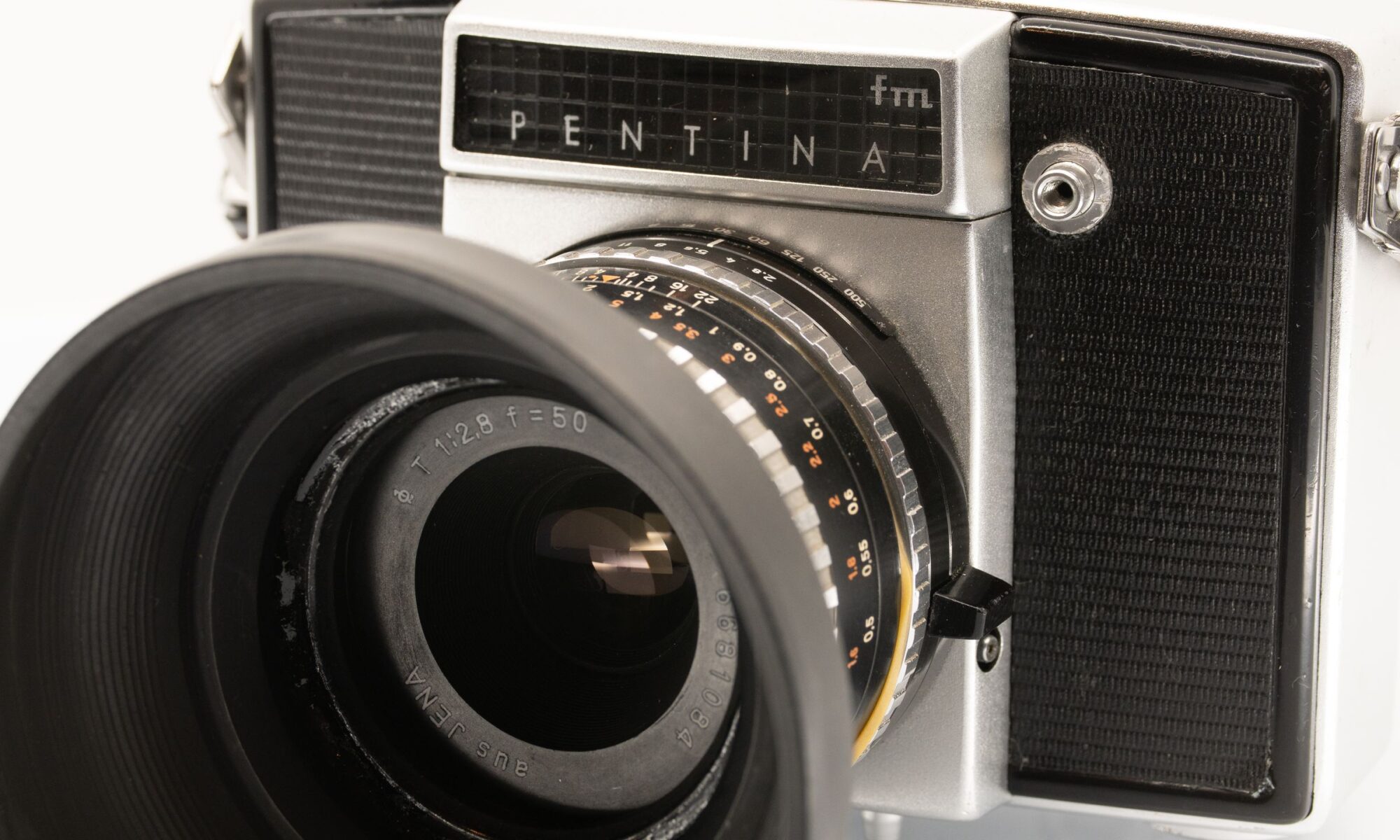
Imagine a time of a camera industry in a socialist country under immense pressure to perform in a highly competitive and innovative worldwide market. And at the same time surrounded by poverty, hassled by unimaginative and reckless politicians. The 1950s and 1960s were ultimately the most dramatic times for the East German camera industry which, from its knowledge gained from the West German legacy, initially looked promising, but finally degenerated into a loss-making competition due to the unreasonable and unachievable demands of the East German system. The VEB Pentina symbolizes the immense complexity and is the embodiment of the proverb: blind pride comes before the fall.
Continue reading “The Psychedelic Pentina”Objective of the Meyer Görlitz Orestegor
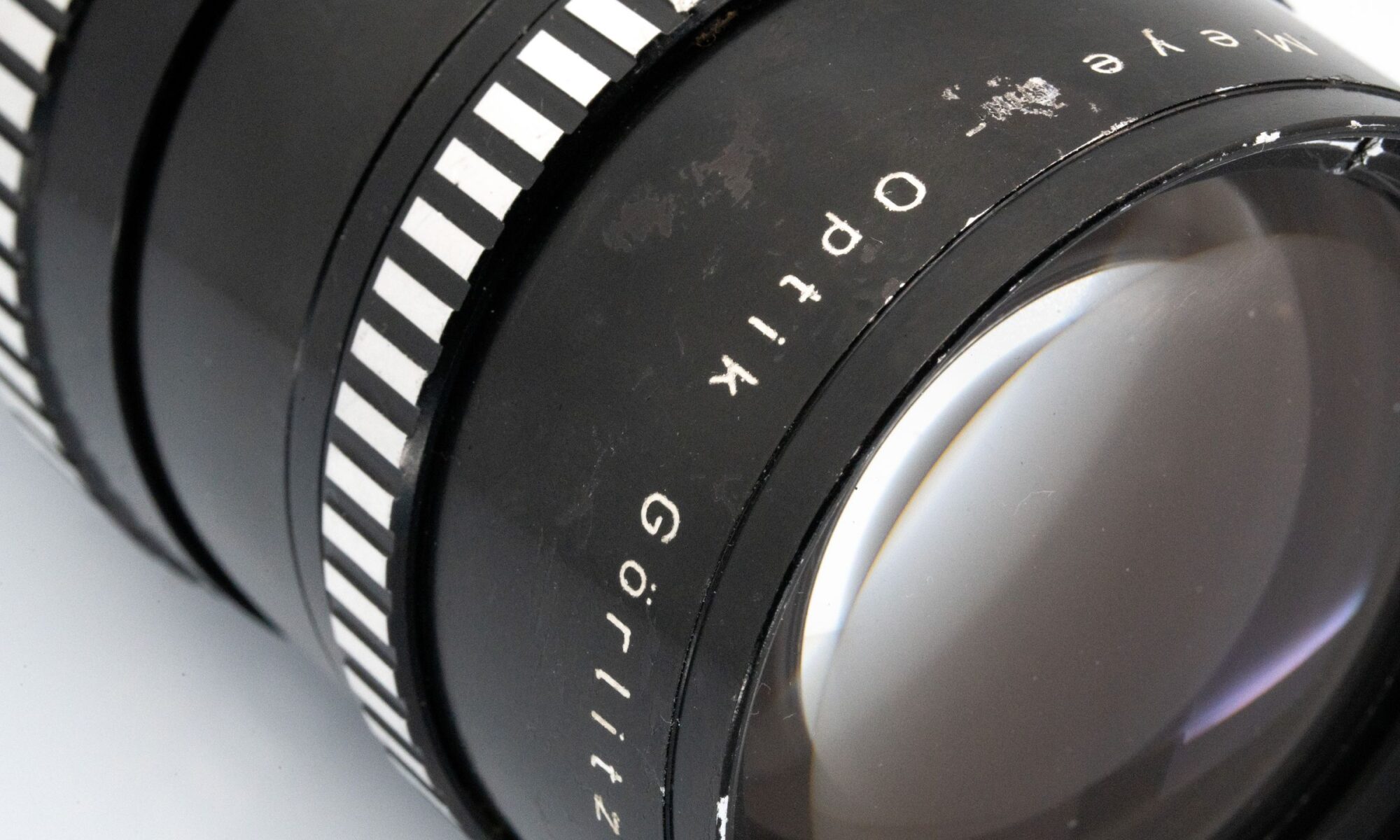
There is no huge market for 200mm prime lenses. We see the 200 mm more often as the closing end of a zoom lens, which distance is very popular for portraiture and product photography as well as nature and wildlife imagery. But as a standalone lens, you probably don’t put it that quickly in your camera bag. Too bad, because the world looks interesting from that focal length and it is easy to test with, e.g., the review of this fantastic vintage Orestegor from Meyer Görlitz.
Continue reading “Objective of the Meyer Görlitz Orestegor”